Year 4 core project · NTU · Robotic Vehicle Design Challenge
An autonomous robotic vehicle that detects, collects and delivers tennis balls to a drop-off zone within an arena, with no human intervention.
The problem
Design and build a vehicle that works on its own in a defined arena: find tennis balls, pick them up, avoid obstacles, and deliver the balls to a drop-off zone. It brings together mechanical design, sensor integration and control algorithms on a microcontroller-based system.
What I did
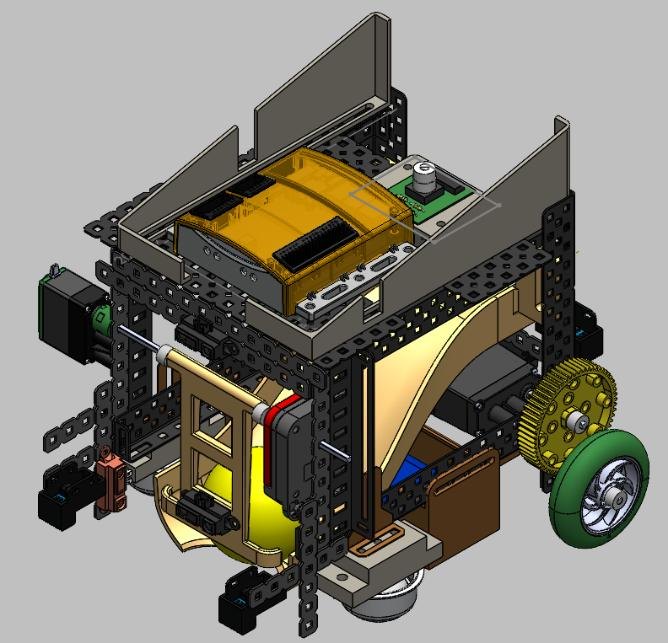
- Led the CAD model assembly and ran dynamic simulations of critical subsystems such as the sweeper and the ramp.
- Defined feasible design dimensions to prevent mechanical collisions and assembly misfits. Catching these early in CAD saved the team repeated 3D-printing iterations, and so time and material.
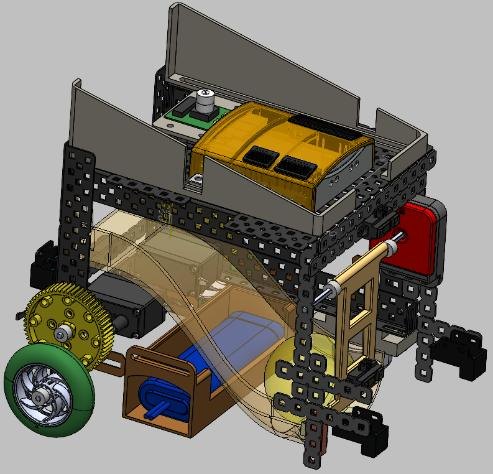
- Designed the battery holder, placed to lower the vehicle’s centre of gravity for better stability on the move.
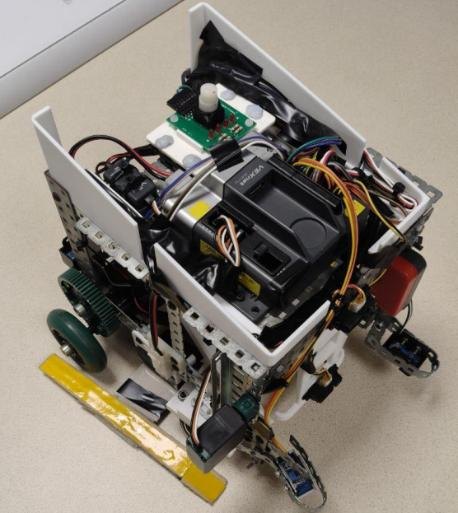
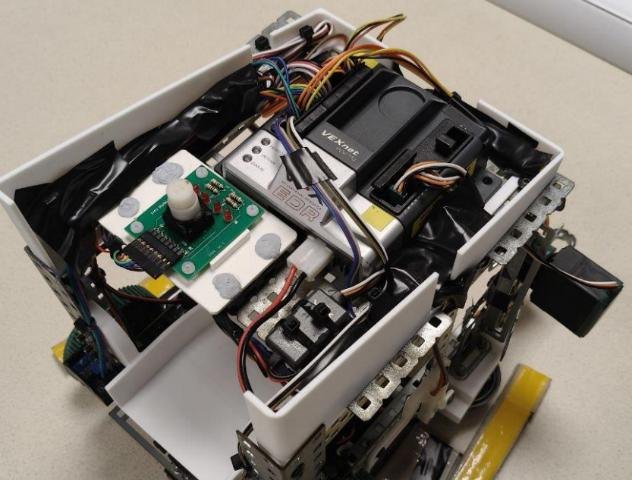
- Designed a housing enclosure for cable routing, protecting exposed wiring from impacts during competition.
- Simulated full-system configurations, such as a 4-wheel-drive setup, to test whether team ideas were viable before building them.
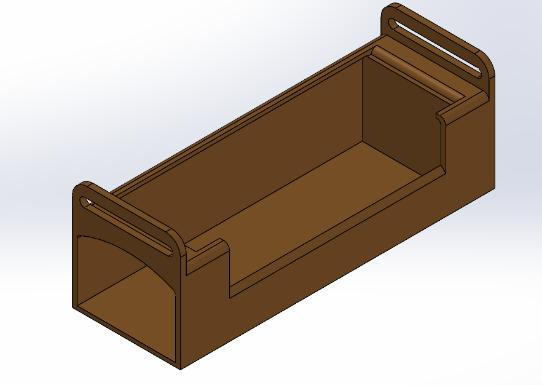
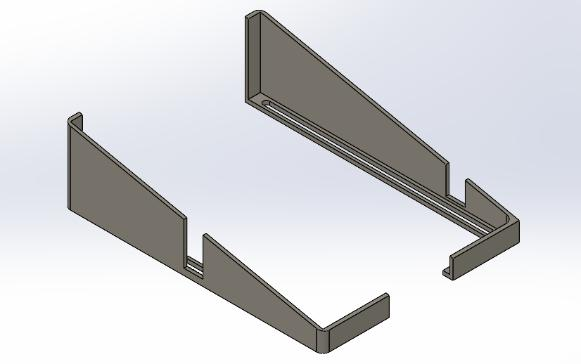
How they fit into the vehicle: the battery holder in the assembly, and the housing keeping the wiring tidy on the final prototype.
A design that didn’t make it
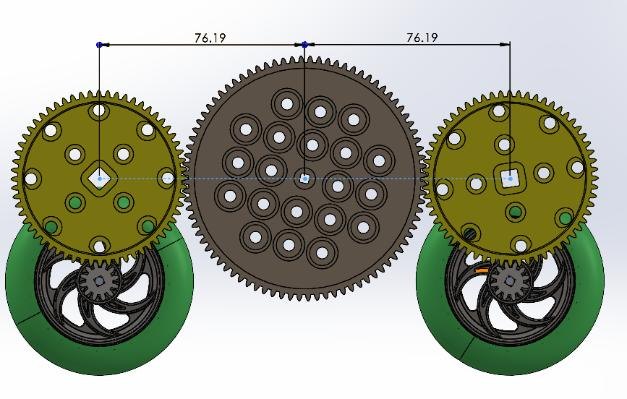
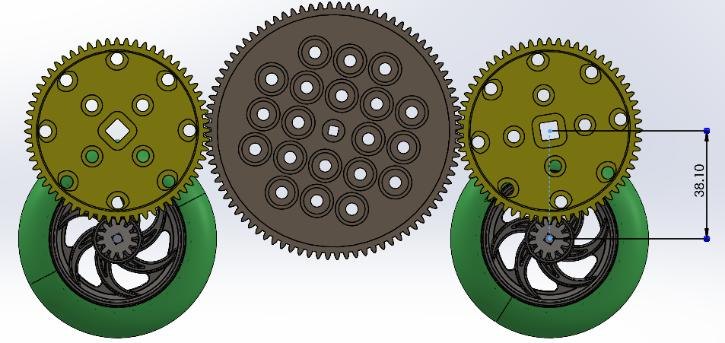
I also designed a gear train, setting the centre distances from the gear-tooth parameters (addendum, dedendum and number of teeth). It was fabricated and tested successfully, but it didn’t fit the vehicle’s fixed architecture, so it was left out of the final design.