Internship · Flex Logistics · NTU · May – Jul 2024
A smart shelf for automated inventory monitoring and restocking, replacing an RFID-based process that relied heavily on people. Calibrated load cells under every bin measure stock by weight, in real time.
The problem
Stock was tracked with RFID, and the process relied heavily on people, so records kept drifting out of step with what was actually on the shelves. Restocking and inspection meant slow manual checks that were prone to human error.
How it works
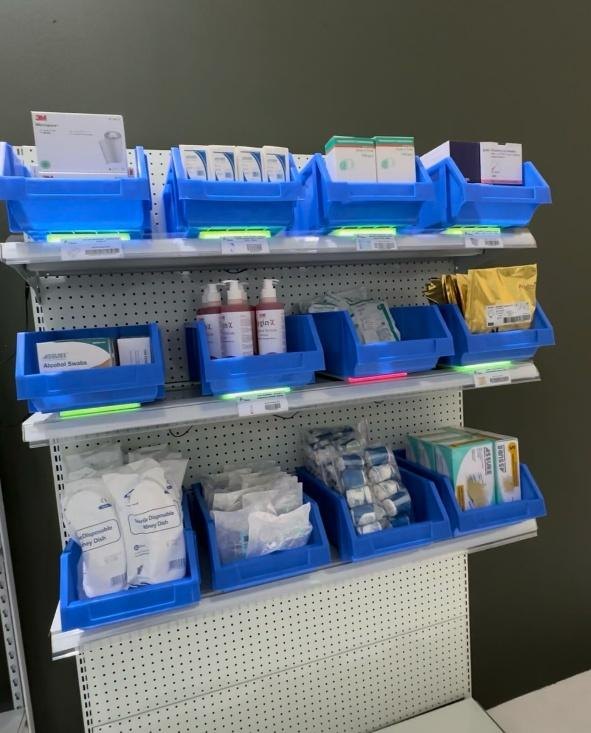
Each bin sits on a load-sensing platform with calibrated load cells that measure the weight of the stored items in real time. A connected system monitors the readings continuously:
- While a product’s quantity is above a set threshold, a green LED under the bin lights up: stock is sufficient.
- When it drops below the threshold, a red LED signals that restocking is needed.
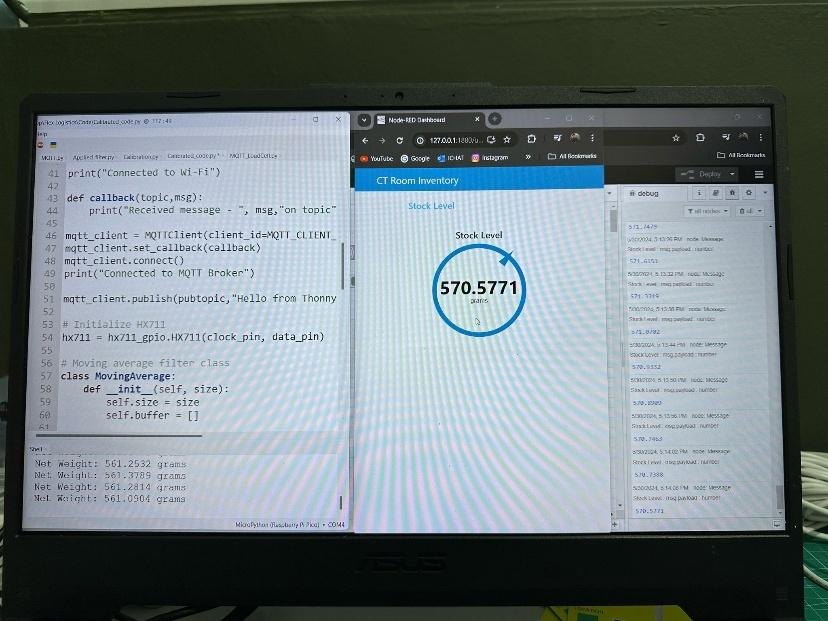
- All weight data is sent in real time to a remote monitoring interface, so each client’s current stock levels can be tracked instantly.
What I delivered
- Replaced the RFID system with a load-cell solution to reduce human error.
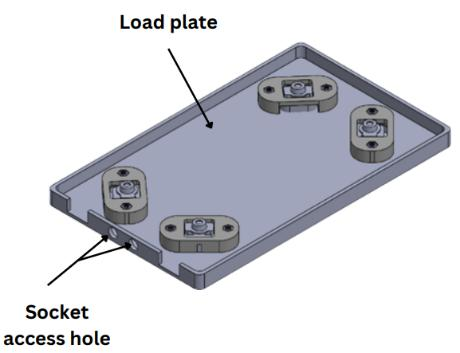
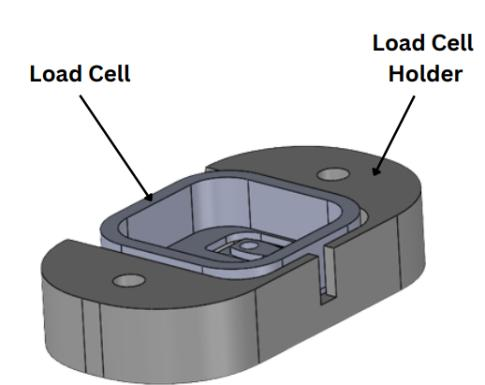
- Designed and fabricated an integrated sensor plate housing calibrated 4-wire load cells for real-time weight sensing.
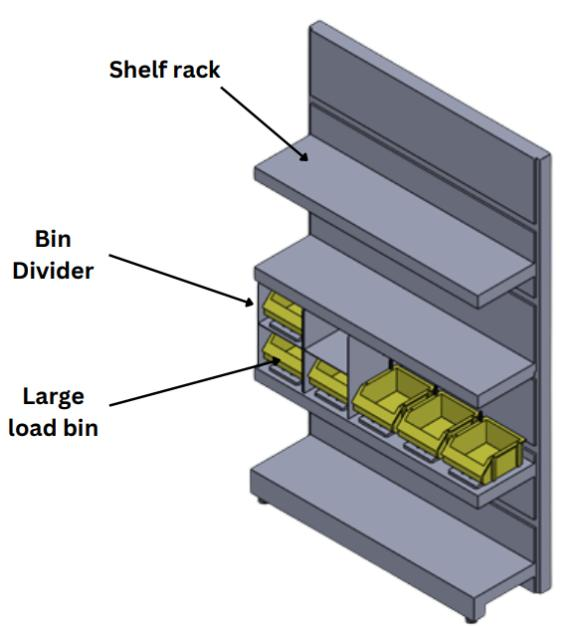
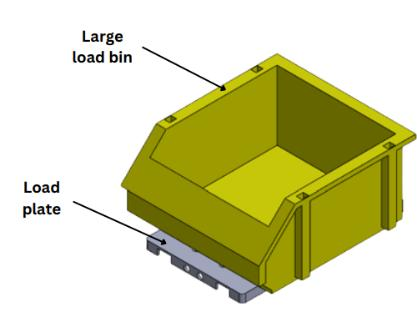
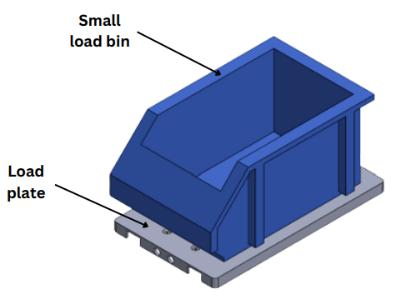
- A modular bin arrangement that scales inventory tracking to different supply-chain needs.
- A final design optimised for manufacturability, robustness and serviceability.
Design details
All the mechanical design was mine, done in SolidWorks:
My role
I led the transition from the RFID-based system to the fully automated solution and was responsible for the end-to-end mechanical design:
- Designed for scalability, manufacturability and budget, liaising directly with local manufacturers.
- Developed custom load plates and cable housings that keep sensor readings stable under real handling.
- Collaborated across teams to improve delivery and stocking processes with sensor-driven automation.
What I took away
- Stronger technical design, hardware integration and project coordination skills.
- Designing for scale: a part that works once isn’t the same as a part you can afford to build for every shelf.
- First-hand exposure to how industrial automation is applied in logistics.